Reactive Dog Behaviour Training Adelaide

Helping Dogs That Bark, Lunge or Overreact On Walks

If Walks Have Become Stressful — You’re Not Alone

Many owners reach out when walking their dog no longer feels enjoyable.

Instead, it feels:

  • Embarrassing when your dog reacts
  • Stressful trying to avoid other dogs
  • Unpredictable and hard to manage
  • Like you’re constantly on edge

Some owners even stop walking their dog altogether.

It doesn’t have to stay this way.

If you’re looking for general dog training in Adelaide, visit our Dog Training Adelaide page.
For broader behaviour issues, see our Dog Behaviour Training Adelaide page.

Common signs of reactivity include:

  • Barking or lunging at other dogs
  • Growling or snapping on walks
  • Over-excitement when seeing another dog
  • Pulling and losing focus when another dog appears
  • Becoming tense or unpredictable around unfamiliar dogs

For many families, even simple walks can feel overwhelming.

We Come To You — And Work With the Behaviour Where It Happens

Reactive behaviour often looks very different in a training environment than it does on your normal walk.

That’s why we work with you in the places where your dog is actually experiencing difficulty — around your home, street and usual walking environment.

This allows us to:

  • observe what happens before the reaction begins

  • understand the triggers and conditions influencing your dog

  • recognise changes in your dog’s state of mind before they react

  • show you how to respond clearly and appropriately

  • help your dog experience these situations differently

Our aim is not simply to give you greater control on walks. It is to help your dog develop a greater capacity to remain present and respond differently when something in the environment challenges them.

Why Dogs Become Reactive

Your dog isn’t trying to give you a hard time. Their reaction is their way of responding to something they are experiencing.

A dog may bark, lunge, pull, fixate or growl because they are trying to create distance, move toward something, release tension, control uncertainty or respond to a situation they don’t yet have the capacity to navigate differently.

By the time the outward reaction appears, however, an important change has often already taken place.

The dog may have become increasingly alert, fixated or activated long before the barking or lunging begins.

That is why we don’t focus only on stopping the reaction.

We look at what happens before it — the dog’s state of mind, their relationship with the environment, the conditions influencing them and their capacity to remain present when something challenges them.

The reaction is what we see.

Understanding what happens before it is where meaningful change begins.

Why Training Alone May Not Resolve Reactivity

Many reactive dogs already know how to sit, stay, come or walk nicely when they are relaxed.

The difficulty appears when their state of mind changes.

Once a dog becomes highly activated or instinctively focused on something in the environment, their ability to access behaviours they already know can change dramatically.

This is why teaching another behaviour is not always enough. We also need to help the dog develop the capacity to shift their state and remain more present when challenged.

Our Approach — Changing the Conditions Behind the Reaction

Every reactive dog is different, so there is no single technique or exercise that resolves reactivity.

We begin by looking at the whole experience — your dog’s temperament and sensitivity, their triggers, their state before the walk, the environment, your relationship and the way you communicate and respond when situations become difficult.

We then help create conditions that support:

  • greater calm before movement begins

  • clearer communication and direction

  • appropriate boundaries

  • greater trust in the person taking responsibility

  • less need for the dog to control what is happening around them

  • an increased capacity to move from an activated state back toward a relaxed, present state

Over time, the goal is for your dog to become increasingly capable of experiencing a trigger without automatically being captured by it.

This is more than stopping a reaction.

It is helping your dog develop the capacity to respond differently.

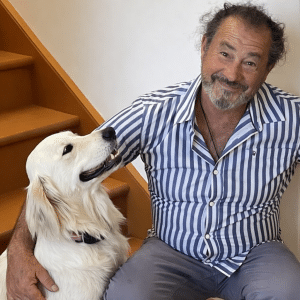
35+ Years of Practical Behaviour ExperienceGeorge Dog Training Adelaide

George Lygidakis has spent more than 35 years working professionally with dogs, from his early career as an Australian Protective Service Dog Handler and Trainer through to thousands of private behaviour consultations.

His approach to reactivity has developed through observing not only what dogs do when they react, but the changes in state that occur before the reaction becomes visible.

Understanding those early changes allows us to work with more than the barking or lunging itself — and help the dog develop a greater capacity to remain present when challenged.

REAL-WORLD TRAINING — NOT THEORY

We come to you and work in your dog’s real environment.

That means:

  • Your home
  • Your street
  • Your walking routes

Not a controlled class setting where behaviour doesn’t fully show up.

This allows us to:

  • observe your dog’s actual triggers
  • guide you through them properly
  • help new responses become more reliable in everyday life

You Don’t Have To Keep Avoiding Walks

Many owners start planning their day around avoiding other dogs.

Different routes.
Different times.
Constant scanning ahead.

It becomes exhausting.

With greater understanding and the right guidance, walks can begin to feel manageable and enjoyable again.

Lasting change doesn’t come from controlling behaviour or simply avoiding the situations that trigger it. It begins by changing the conditions from which behaviour emerges.

LEARN MORE ABOUT REACTIVITY

If you’d like to better understand what’s driving your dog’s behaviour:

Why Your Dog Is Reactive — Before The Walk Even Starts

RELATED ARTICLES

Dog Reactivity – The Moment Your Dog Reacts Isn’t the Problem

Are You Confusing Your Dogs Anxiety With Excitement?

Frustrated by Selective Listening?

Using Treats for Reactive Dogs: Benefits and Limitations

RELATED SUPPORT

Dog Behaviour Training Adelaide
Dog Training Adelaide

If your dog’s reactivity includes threatening, snapping, biting or aggressive behaviour toward people or dogs, learn more about our Dog Aggression Training Adelaide service.

When To Seek Help

If your dog’s behaviour is:

  • making walks stressful
  • affecting your confidence
  • limiting your daily life

Getting the right help early can make a significant difference.


how-to-stop-dogs-barking

Reactive Dog Training in Adelaide

Tell Us What’s Happening On Your Walks

Tell us what you’re experiencing with your dog and we’ll help you understand the most appropriate next step.

We’ll guide you on the best next step and how we can help.

Or call us on 1300306887 or 0402094120

"*" indicates required fields

Name*