Treats can be an extremely useful tool when working with reactive dogs, aggressive dogs and dog aggression, and despite my broader philosophy around behaviour and the human-dog relationship, I do use them myself in certain situations. I may use food when I believe it can help change a dog’s association with something it currently finds difficult, or when I recognise that either the dog or the owner does not yet have the capacity to successfully work through an experience in another way. Sometimes a treat can provide a very useful bridge. But as with any training tool, I believe it is important to understand not simply whether it appears to work, but what it is actually changing within the dog. When a dog is worried, reactive, excited or highly interested in something and we introduce food, several very different things may be happening. We may simply be changing the dog’s attention. We may be helping to change its state of mind. We may be creating a different association with the experience. Or, over time, we may be contributing to a deeper change in the dog’s perception of something it previously believed required a response. These outcomes can look quite similar from the outside, but internally they may be very different.
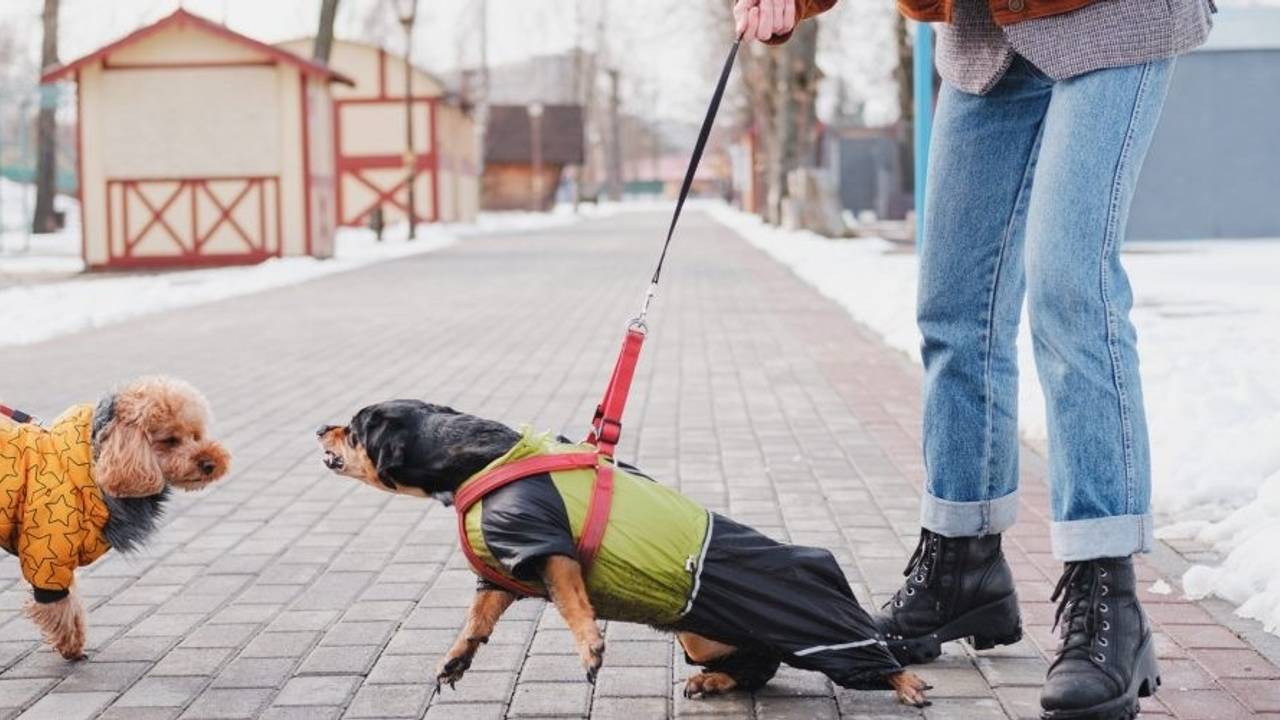
Imagine a dog sees another dog and begins focusing on it. The owner produces a treat, the dog turns away from the other dog and looks at the owner instead. At the most basic level, we have successfully changed the dog’s attention. There can be considerable value in doing this. It may prevent the dog from becoming more highly activated, help avoid an unwanted reaction, create an opportunity to increase distance, or simply allow the owner and dog to move safely through a difficult situation. But I think it is worth asking a deeper question: has the dog’s perception of the other dog actually changed, or have we simply given it something else to focus on? The fact that the dog has stopped looking at what it considers a problem does not necessarily mean the problem has stopped existing within the dog’s experience. Successful distraction and genuine behavioural transformation are not necessarily the same thing.
Food can, however, sometimes do considerably more than redirect attention. With some dogs, introducing food can help change their entire state. Their body may soften, their breathing may change, fixation may reduce and they may become more available to the rest of their environment. If food helps a dog move out of a highly activated state and into one where it can successfully experience what is happening without becoming overwhelmed, then the treat may be doing much more than distracting it. It may be helping create the conditions in which the dog can have a different experience. Food can also be deliberately used to help change an association. Something that has previously predicted fear, discomfort or conflict may gradually begin to predict something different. This is one of the situations where I may choose to use treats myself. I am not opposed to food any more than I am automatically in favour of it. My interest is in understanding what the food is doing in this particular situation, with this particular dog, and whether it is helping us move toward the outcome we ultimately want.
One of the practical issues we need to understand when using food is that the value of the treat is not constant. A dog that is hungry may place considerably more value on a particular piece of food than the same dog shortly after eating. Some dogs are naturally highly motivated by food, while others simply aren’t particularly interested in it. The dog’s state also matters. A piece of chicken that has enormous value while standing in the kitchen may suddenly have very little value when the dog becomes highly activated by something in the environment. So when we describe something as a high-value treat, I think we need to remember that value is relative. High value compared with what? The treat only has the value that particular dog gives it, in that particular state, at that particular moment, compared with everything else currently competing for its attention.
And importantly, it is not only the value of the treat that changes. The value or significance of the trigger changes as well. Imagine your dog is twenty metres away from another dog. The other dog is relaxed, walking quietly, perhaps sniffing the ground and showing very little interest in yours. Your dog may notice it without becoming particularly concerned, and food may easily gain your dog’s attention. Now imagine exactly the same distance and exactly the same treat, but the other dog suddenly stops, stiffens, stares directly at yours, pulls toward it and begins barking. Nothing about the distance has changed. Nothing about the treat has changed. Yet the significance of the experience to your dog may have changed enormously within a few seconds. The chicken that was influential moments earlier may suddenly become almost irrelevant because something else has become far more important within the dog’s experience.
This is why I don’t believe distance alone tells us very much. Twenty metres from a calm, neutral dog can be a completely different psychological experience from twenty metres from a highly excited dog pulling toward you, or a dog barking and behaving aggressively. Even the same dog can represent a completely different level of challenge from one moment to the next. The more useful question is not simply, “How far away is the trigger?” but “How significant is this particular experience to this particular dog right now?” Distance is useful because it can help us regulate that significance, but distance itself is not the experience. What matters is what is happening within the dog at that distance.
This also explains why treat-based behaviour work can sometimes require very careful management and gradual progression. If food is being used as a competing motivator, we generally need to remain at a level of intensity where the food still has sufficient value to influence the dog. At fifty metres, the dog may notice another dog and readily accept food. At thirty metres, the competing interest may become stronger. At ten metres, a highly reactive dog’s fear, excitement, frustration or instinctive response may completely override its interest in food. That doesn’t necessarily mean the treat has failed. It may simply mean that the significance of the trigger has exceeded the influence of the food at that moment. Moving too close too quickly can therefore take the dog beyond the conditions in which the food was helping. Used skilfully, carefully managed distance can create successful experiences and gradually develop capacity, but the appropriate distance will vary enormously between dogs, between triggers and even from one moment to another.
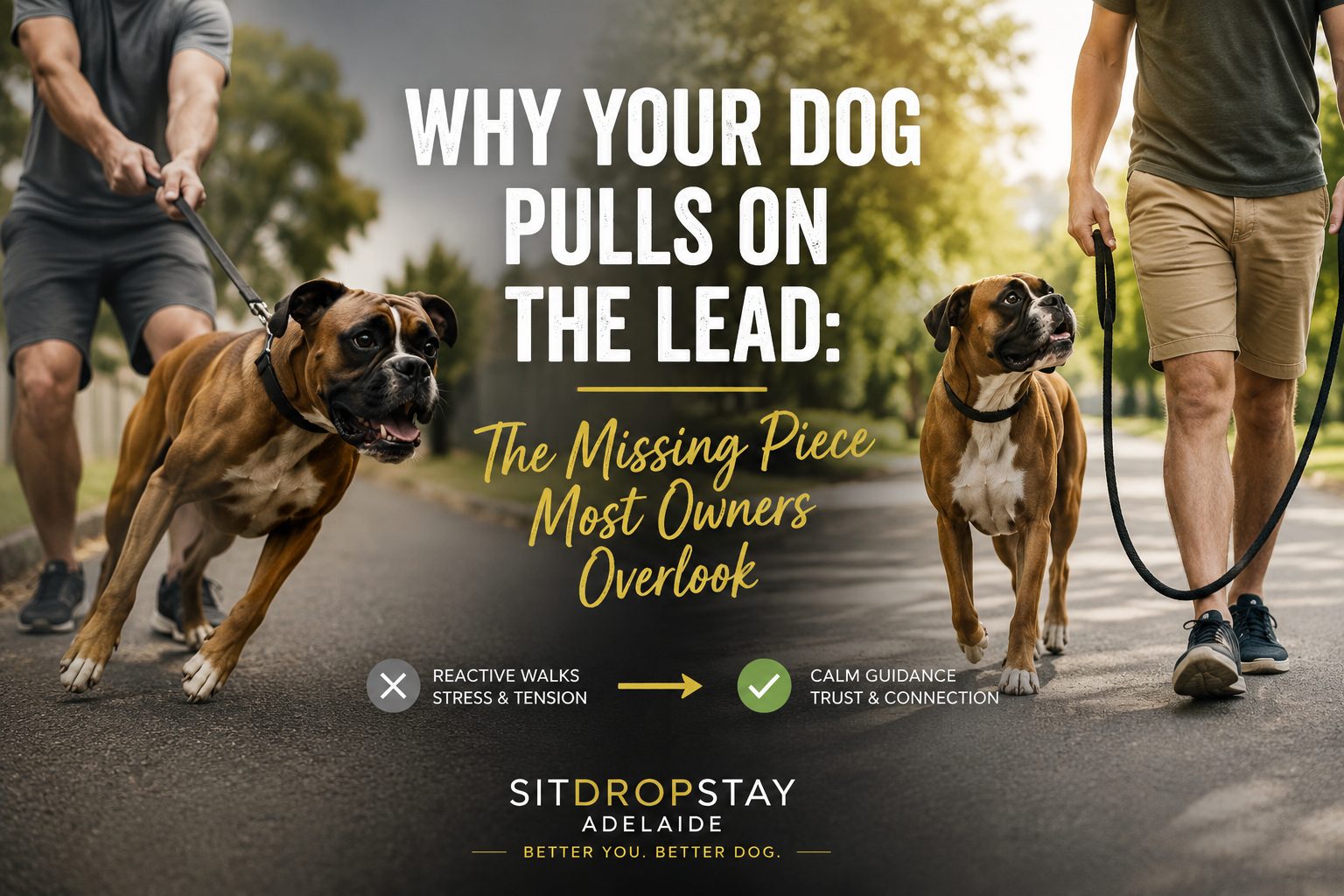
There is another part of using treats around behaviour problems that I believe deserves more attention. The dog is not only experiencing the treat. It is experiencing the whole human delivering it. Another dog appears and suddenly the owner changes. Their attention moves completely onto their dog. Their voice may become higher and more animated. “Yes! Good boy! Look at me!” They reach for food, perhaps shorten the lead, change their movement and become intensely focused on preventing a reaction. The intention is completely understandable and usually very positive. The owner is trying to communicate that everything is okay. But it is worth considering the total information available to the dog. While the food may be communicating something positive, the sudden change in the human’s voice, movement, attention and emotional intensity may simultaneously communicate, “Something significant has just happened.” This doesn’t mean that using an excited voice or giving food creates a behaviour problem. It simply reminds us that the treat is only one part of the information the dog is receiving.
This is where I believe the human’s own state becomes particularly important. Another dog appears. Do you remain aware of the whole experience and calmly decide that food would be useful? Or does your own attention immediately narrow? Where are the treats? Watch my dog. Get his attention. Don’t let him look. Keep feeding. Don’t let him react. Without realising it, the owner can become just as focused on the dog’s problem as the dog has become focused on the trigger. The dog fixates on another dog, while the owner fixates on the dog’s fixation. Both can progressively lose awareness of everything else that is happening. This is one reason I encourage owners to practise being present and aware when nothing is wrong. If you cannot experience calmness, openness and awareness while walking your dog when there is no problem, it is unrealistic to expect yourself to suddenly find those qualities when there is one.
Your dog is experiencing you at the same time it is experiencing everything else. If your dog becomes concerned and you immediately become concerned about your dog’s concern, you may unintentionally add further significance to what is happening. This doesn’t mean ignoring the dog or pretending there isn’t a problem. It means remaining aware of the problem without allowing the problem to become the whole of your experience. Be aware of your dog. Be aware of the other dog. Be aware of yourself. Be aware of the environment. And remain clear about the experience you are trying to create. If you want your dog eventually to experience another dog without feeling the need to fix, control, avoid or react to it, see whether you can remain connected to some of that experience within yourself. You cannot guide your dog somewhere you have already left yourself.
This is also why I see food as potentially being a very useful bridge rather than something we necessarily need to build an entire behavioural approach around. There will be situations where food is exactly what a dog or owner needs at that stage. It may help prevent an unsafe reaction, allow sufficient distance from overwhelm, change an association, help the dog shift state or give an inexperienced owner a practical way of successfully navigating something they currently cannot manage another way. There is nothing wrong with meeting the dog and owner where they are. But over time I would want to know where that bridge is taking us. Is the dog becoming increasingly capable of experiencing the situation without needing food? Is the owner becoming increasingly capable of remaining present without depending upon the technique? Is the trigger carrying less significance? Is the dog’s perception changing? Is the whole situation gradually requiring less management?
One useful way of evaluating this is to ask what level of change is actually occurring. Did I change my dog’s attention? Did I change my dog’s state? Did I begin changing my dog’s perception? Or am I helping my dog develop greater capacity? If I moved the dog’s attention from another dog onto a piece of chicken, that may have been useful. If the dog genuinely softened and became more available to its environment, something more may have occurred. If repeated successful experiences begin changing what another dog means to it, we may be moving deeper again. And if eventually my dog can successfully experience situations that previously required considerable external management, then we are beginning to develop genuine capacity. None of these outcomes needs to be criticised. They simply need to be understood.
For me, the deepest goal is not simply to become increasingly skilled at distracting a dog from something it considers a problem. Nor is it to continually correct the dog for responding to something it still believes requires a response. I am interested in whether we can eventually change the dog’s experience sufficiently that there is less of a problem requiring management in the first place. Initially, another dog may require considerable distance, food, direction or management. Later, perhaps less. Eventually the dog may simply notice another dog, observe it while remaining available to the rest of its environment, and then naturally move on. Nothing needs fixing. Nothing needs avoiding. Nothing needs distracting from. Nothing needs correcting. The other dog has simply become another part of the experience.
So perhaps the most useful question isn’t “Should I use treats?” I don’t think there is a universal answer to that question. Treats are neither inherently good nor bad. They are simply one tool available to us, and there are situations where they can be extremely useful. A more valuable question might be: “What role is the treat playing in my dog’s experience, and is that role helping us move toward the outcome we ultimately want?” If food is helping, use it thoughtfully. If it is providing a bridge, understand what you hope to find on the other side. If it is simply managing a situation safely, there can be value in recognising that too. We don’t need to judge the technique. We simply need to understand what it is accomplishing.
And perhaps one of the best measures of genuine progress is surprisingly simple: as my dog develops, does this experience require less from both of us? Less distraction. Less correction. Less management. Less monitoring. Less fixation. Less need to control the environment so carefully. Until eventually there is simply greater capacity to experience what is there, respond when something genuinely requires a response, and otherwise let it pass.
The goal, at least from my perspective, isn’t necessarily to find a more powerful technique.
It is to create a dog for whom progressively less technique is required.