Why Your Dog Pulls On the Lead – The Missing Piece Most Owners Overlook
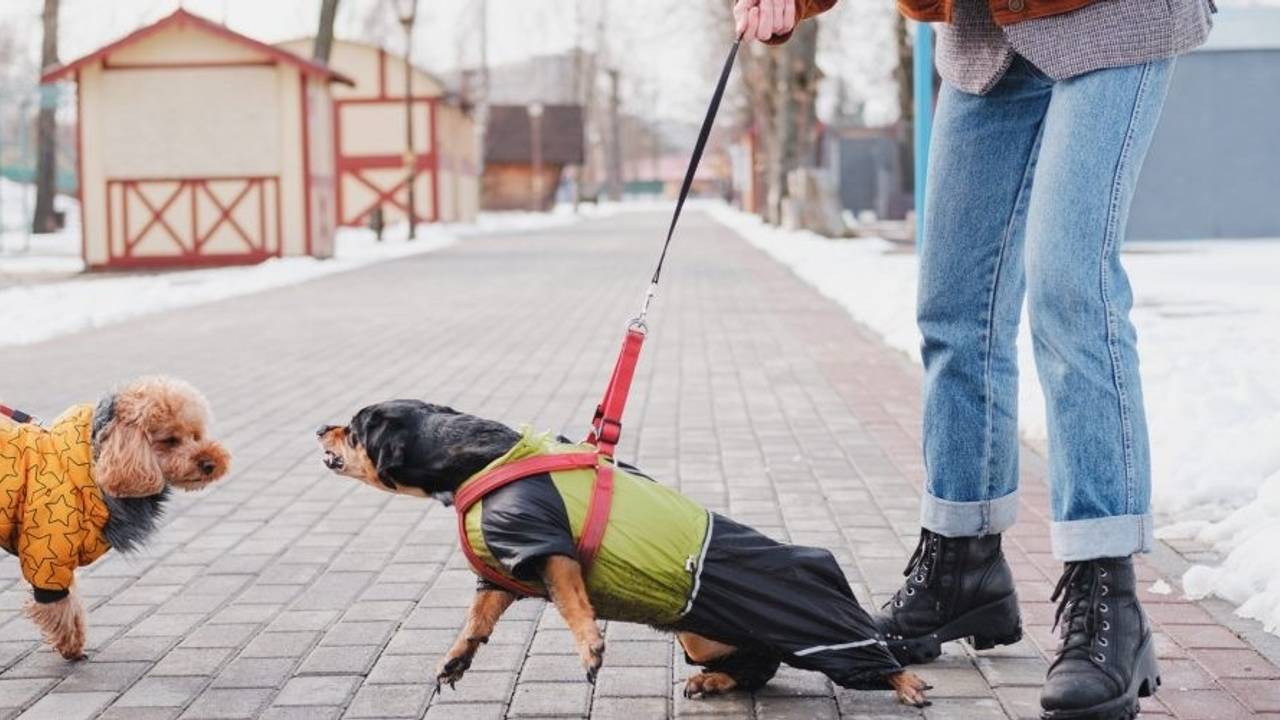
If walking your dog feels more like being dragged down the street than enjoying time together, you’re certainly not alone. Many of the people we work with contact us because their dog pulls relentlessly on the lead, lunges towards other dogs or people, becomes overexcited by everything around them, or seems completely unable to settle once they leave the house. Over time, the walk itself can become stressful for both dog and owner. Instead of being an enjoyable experience together, owners begin leaving home already anticipating what might go wrong, scanning ahead for other dogs, tightening the lead when someone approaches and wondering whether today’s walk will be better or worse than the last.
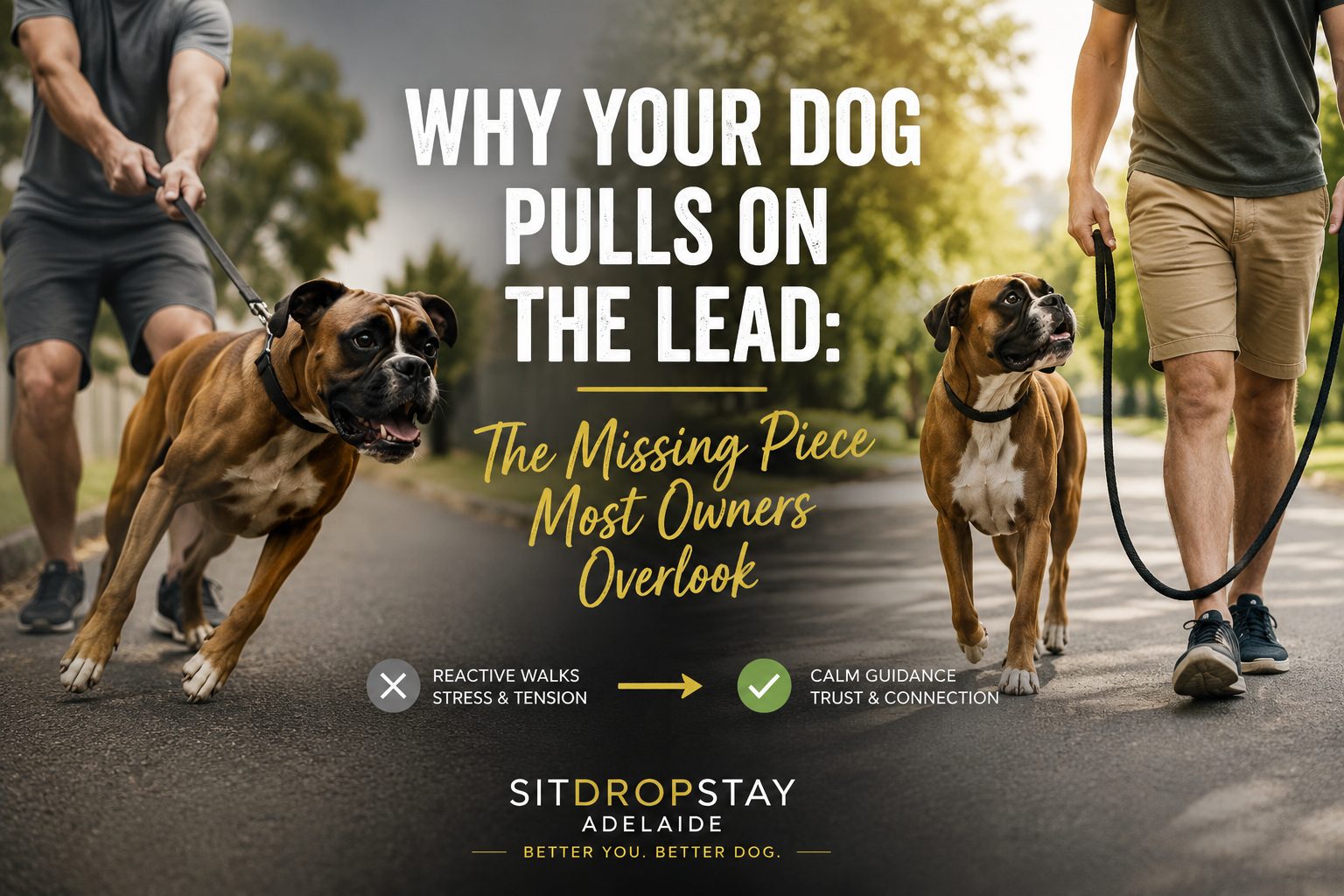
Recently, we worked with Denver, a 10-month-old Boxer who had become increasingly difficult to walk. Like many young, energetic dogs, Denver had developed a pattern of pulling strongly on the lead and lunging towards both dogs and people. His owners had been doing their best to manage him, but walks were becoming stressful and exhausting. What happened during our session — and more importantly, what happened the following day — illustrates something we see repeatedly in our work. Sometimes the greatest change doesn’t come from finding a better technique for stopping a behaviour. It comes from changing the conditions that have been allowing that behaviour to emerge in the first place.
It’s Not Just About the Dog
One of the biggest difficulties owners experience on walks is that their attention gradually becomes consumed by their dog. They watch what the dog is doing, anticipate what the dog might do next and continually scan the environment for anything that could cause a reaction. This is completely understandable, particularly when you have a strong or reactive dog, but something important can begin to happen: the more attention we place on managing the dog’s experience, the less awareness we sometimes have of our own.
Dogs are remarkably sensitive to the people they live with. They experience our tension, hesitation, movement, direction, consistency and attention. If we are continually responding to what our dog does, the relationship can gradually become reversed without us even realising it. The dog begins determining the pace, direction and emotional tone of the walk, while the owner follows behind trying to manage the consequences.
This isn’t about blaming owners for their dog’s behaviour. It’s about recognising something much more useful: we are part of the conditions influencing it. And if we are part of those conditions, we also have the ability to change them.
Teaching a Dog to Follow Begins Before the Lead Goes Loose
With Denver, our goal wasn’t simply to stop him pulling. Pulling was the behaviour we could see, but continually correcting that behaviour wouldn’t necessarily address why it was happening. Instead, we changed the overall experience of the walk. We helped Denver move from a highly active state — constantly engaging with and responding to the environment — towards a more relaxed state in which he could begin paying attention, relinquishing some responsibility and naturally following his owners’ direction.
At the same time, his owners had to make a change of their own. Rather than continually asking, “What is my dog doing?”, we encouraged them to become more aware of “What am I bringing to this walk?” Am I relaxed and present? Do I know where I’m going? Am I communicating clearly through my movement and intention? Am I providing direction, or am I waiting for my dog to do something and then reacting to it?
This distinction might sound small, but in practice it can completely change the relationship between a person and their dog. When we become calmer, clearer and less reactive ourselves, we begin creating different conditions around the dog. Instead of constantly having to make decisions about where to go, what to investigate and how to respond to everything around them, the dog can begin to let some of that responsibility go.
And when that happens, following becomes much more natural.
What Happened the Following Day
The day after our session, Denver’s owners sent us this message:
“Hi George, thanks again for your expertise. We have a completely different dog on day 1 after your training.”
They also left this five-star review:
“Thank you George for assisting us with our 10-month-old male Boxer. I phoned quite a few different dog trainers all claiming to be the best, but it was my first phone call to Emma that made the decision to go with SitDropStay Adelaide. Emma took the time to actually listen to the problem and didn’t rush through the phone call, so I knew I was making the right decision. Then George ‘nailed it’! A lot of trainers talk the talk but George can actually walk the walk.”
Every dog is different, and meaningful behaviour change should never be reduced to promises of instant results or a single technique. Denver and his owners will still need consistency and continued practice. But their experience demonstrates how quickly behaviour can sometimes begin to change when we stop concentrating solely on the behaviour itself and start looking at the conditions surrounding it.
Pulling Is Often a Symptom, Not the Problem
Traditional approaches to lead pulling often begin with the obvious question: How do we stop the dog from pulling? It’s a reasonable question, but after more than thirty years working with dogs and their owners, I’ve come to believe there is often a more useful question to ask first:
Why does pulling make sense to this dog in the first place?
A dog may pull because of excitement, overarousal, anxiety, frustration, habit or an overwhelming desire to interact with the environment. Some dogs have simply spent so much time making decisions and directing the walk that pulling has become their natural way of moving through the world. In each case, the pulling we see is not necessarily the underlying problem. It may be the dog’s solution to something else.
This is why one of the ideas at the heart of our approach at SitDropStay is that your dog’s unwanted behaviour is often their solution to a problem — not the problem itself. If we concentrate only on stopping the solution without understanding the problem the dog is attempting to solve, we can spend months correcting behaviour without fundamentally changing what is producing it.
Creating the Conditions for a Different Behaviour
This is where our approach to dog behaviour has evolved considerably over the years. Rather than asking only how we can make a dog behave differently, we increasingly ask: what conditions would make a different behaviour more natural?
For a dog like Denver, those conditions may include clearer direction, greater predictability, appropriate boundaries, less responsibility for managing the environment and a calmer, more present person at the other end of the lead. When those conditions begin to change, we don’t always have to fight so hard against the unwanted behaviour. The need for it can begin to diminish.
That distinction has become increasingly important in the way we work with dogs. Lasting behaviour change doesn’t always come from controlling behaviour more effectively. Very often, it begins by changing the conditions from which behaviour emerges.
The Walk Is About More Than Walking
A walk can tell us an enormous amount about the relationship we have with our dog. It shows us where our attention goes, how quickly we become reactive, whether our direction is clear and whether our dog feels they need to take responsibility for everything happening around them.
For this reason, teaching a dog to walk calmly isn’t simply about achieving a loose lead. It can become an opportunity for both dog and owner to experience the relationship differently. The dog learns that they don’t have to control or respond to everything around them, while the owner learns that calm guidance doesn’t require force, constant correction or continual management.
Sometimes the greatest shift occurs when we stop trying so hard to control what our dog is doing and become more aware of what we are creating around them.
Better You. Better Dog.
You don’t have to dread walking your dog. Whether your dog pulls on the lead, reacts to other dogs, lunges towards people or simply struggles to settle outside the home, the behaviour you are seeing is telling you something.
Our role isn’t simply to make that behaviour disappear. It is to understand why it is happening and help create the conditions in which something better can naturally emerge.
Our in-home dog behaviour and training sessions allow us to work with you and your dog in the environments where these behaviours actually occur. Rather than relying on endless exercises or trying to control every response, we help you understand your dog’s behaviour, recognise your own influence and develop the calm, clear guidance that can create meaningful and lasting change.
Because sometimes the biggest transformation doesn’t begin with changing the dog.
It begins by changing the conditions.
Related Services
SitDropStay Adelaide
Better You. Better Dog.